Copper Lagan vs. Brass Lagan — Which One Should You Choose for Your Kitchen?
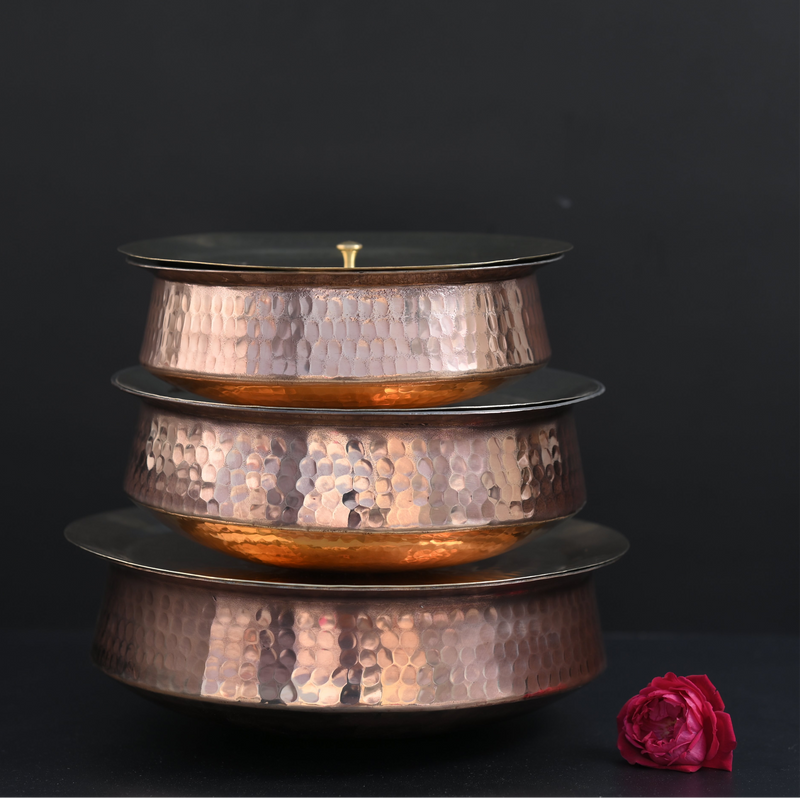
Let’s explore the key differences, benefits, and care tips for both, so you can make the best choice for your cooking style.
What Is a Lagan?
A lagan is a traditional Indian cooking vessel with a wide base and shallow depth, designed to ensure even heating and slow cooking. It is ideal for recipes that require simmering over low heat for a long time, such as biryanis, curries, or sweets like rabri and halwa. The shape of a lagan helps preserve the natural flavors and aromas of food while allowing spices to infuse deeply.
Historically, these utensils were made from metals like copper and brass due to their exceptional heat conduction and health benefits — and they continue to be cherished by traditional cooks and chefs alike.
The Beauty and Benefits of a Copper Lagan
A copper lagan is prized for its superior heat conductivity. Copper distributes heat evenly and quickly, ensuring that your food cooks uniformly without burning or sticking. This makes it perfect for delicate preparations where temperature control is crucial.
Key Benefits of a Copper Lagan:
Excellent Heat Distribution: Copper ensures the heat spreads evenly, which is ideal for slow-cooked gravies and sweets.
Enhances Flavor: Many traditional chefs believe that a copper lagan enhances the taste of food by allowing ingredients to cook gently and retain their natural essence.
Aesthetic Appeal: With its warm reddish tone, a copper lagan adds a royal touch to your kitchen and dining setup.
Long-Lasting Durability: When properly maintained (often with tin or stainless-steel lining), it can last for decades.
However, copper reacts with acidic foods, so it must always be lined with a safe metal coating, usually tin (kalai), to prevent any metallic reaction and preserve food safety.
Why Choose a Brass Lagan?
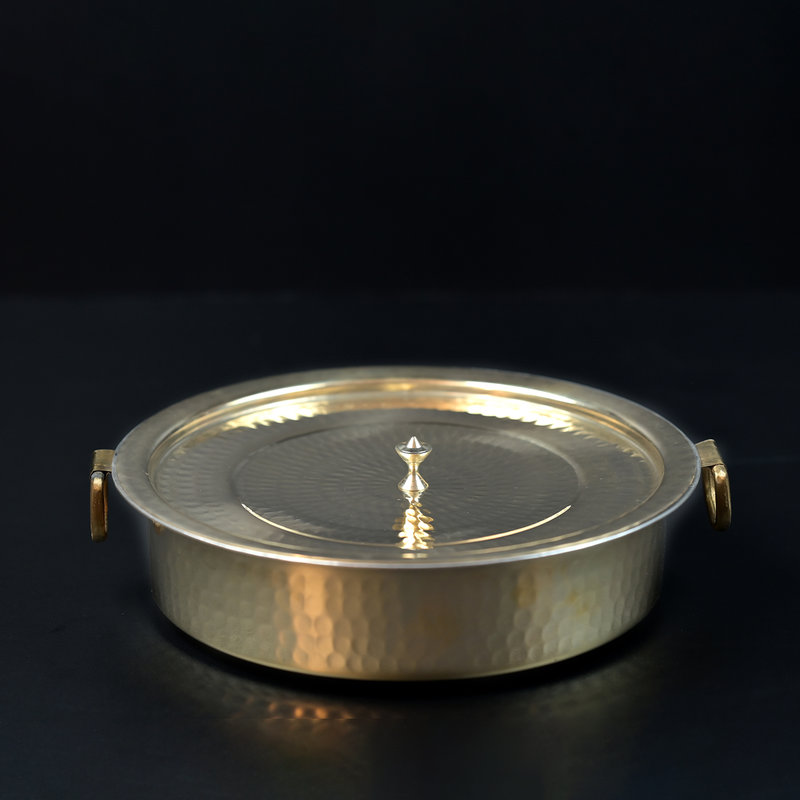
Key Benefits of a Brass Lagan:
Retains Heat Longer: Brass heats up slower than copper but retains heat for a longer period, making it perfect for dishes that need consistent warmth.
Adds a Rich Aroma: Many cooks love how food prepared in a brass lagan develops a distinct earthy flavor that modern cookware can’t replicate.
Health Benefits: Brass has trace elements of zinc and copper, which can add mild health benefits when used with proper tin lining.
Timeless Look: A polished brass lagan gleams with golden charm and often becomes a family heirloom passed down through generations.
Just like copper, brass also requires kalai (tin coating) to prevent reaction with acidic foods and maintain its cooking safety.
Copper Lagan vs. Brass Lagan — The Key Differences
Here’s a side-by-side comparison to help you decide:
In essence, if you want quick heating and precise control, a copper lagan is your best bet. But if you prefer slow-cooked, aromatic dishes that stay warm longer, a brass lagan is a beautiful and practical choice.
Maintenance and Care Tips
To keep your lagan in top condition:
Always clean it gently with lemon and salt or a mild brass/copper cleaner.
Avoid harsh detergents, as they can damage the surface and remove the tin lining.
Get your copper lagan or brass lagan re-tinned periodically to maintain safety and performance.
Dry thoroughly after washing to prevent tarnishing.
With these simple care steps, your traditional cookware can last a lifetime and continue to enhance your cooking experience.
Final Thoughts
Both copper lagan and brass lagan represent the timeless charm of Indian culinary traditions. They’re not just cookware — they’re pieces of heritage that bring flavor, authenticity, and beauty to your kitchen.
If you value precision and fast cooking, go for a copper lagan. But if you love slow cooking and the rich, earthy essence of traditional dishes, a brass lagan will win your heart.
Either way, bringing one into your kitchen is more than a choice — it’s a celebration of tradition, taste, and timeless craftsmanship.


Comments
Post a Comment